


Saudi Arabia’s Agrochemical Industry Advances Through Smarter and Sustainable Farming
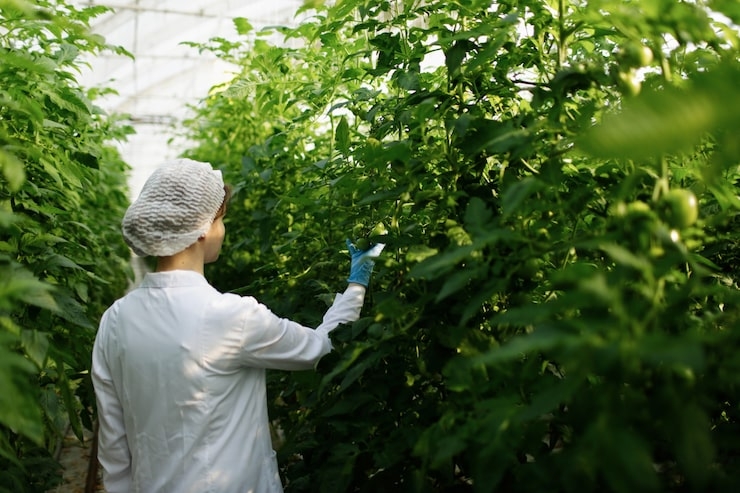
Saudi Arabia is transforming its agricultural sector as the Kingdom works to strengthen food security, improve farm productivity, and make better use of scarce natural resources. With most of the country characterized by arid conditions and limited cultivable land, farmers increasingly depend on fertilizers, pesticides, plant growth regulators, and other crop-input solutions to maximize productivity from available agricultural areas. At the same time, precision irrigation, controlled-environment agriculture, and sustainable farming practices are creating new requirements for specialized agrochemical products.
According to a comprehensive assessment by Markntel Advisor, Saudi Arabia’s agrochemical industry was valued at USD 1.8 billion in 2025 and is projected to reach USD 2.67 billion by 2030, registering a CAGR of 6.78% during 2026–2030. The Saudi Arabia agrochemicals industry report identifies food-security initiatives, agricultural modernization, limited arable land, technological adoption, and expanding domestic fertilizer production as key factors supporting the industry’s development.
Food Security Strengthens Agrochemical Demand
Food security remains one of the major priorities behind Saudi Arabia’s agricultural modernization. The Kingdom is investing in technologies and farming systems designed to increase crop productivity while reducing pressure on water and land resources.
Agrochemicals play an important role in this transition because fertilizers can replenish essential nutrients, while pesticides help protect crops from pests and diseases. The combination enables farmers to improve productivity across relatively limited cultivated areas.
Government programs under Vision 2030 are supporting this transition through agricultural financing, technological assistance, and initiatives designed to improve domestic food production. These efforts are encouraging producers to adopt modern inputs alongside advanced cultivation practices.
Fertilizers Retain the Leading Position
Fertilizers represent the largest agrochemical type, accounting for approximately 52% of the industry. The segment benefits from the nutrient limitations of many agricultural soils, where nitrogen, phosphorus, and potassium are essential for maintaining crop growth and productivity.
Saudi Arabia also has an important advantage in fertilizer manufacturing because of its availability of natural gas and phosphate resources. Major industrial investments are strengthening domestic production capacity, allowing the country to serve agricultural requirements while maintaining a significant export-oriented fertilizer industry.
The development of large-scale phosphate and nitrogen fertilizer facilities is also strengthening the connection between Saudi Arabia’s mining, energy, chemicals, and agricultural sectors.
Liquid Formulations Support Precision Farming
Liquid formulations account for nearly 54% of the industry, making them the leading formulation category. Their popularity is closely linked with modern irrigation and precision-farming systems.
Liquid fertilizers and crop-protection products can be integrated into fertigation systems, enabling nutrients and other inputs to be distributed through irrigation networks. This is particularly valuable in arid agricultural environments where farmers need to carefully control both water and chemical application.
The Saudi Ministry of Environment, Water and Agriculture’s agricultural initiatives emphasize precision agriculture, smart irrigation, artificial intelligence, drones, and other technologies aimed at improving resource efficiency, creating favorable conditions for specialized agrochemical solutions.
Technology-Driven Farming Gains Momentum
Technology is increasingly influencing how Saudi farmers manage crops. Sensors, satellite imagery, automated irrigation, drones, and AI-powered analytics can provide farmers with detailed information about soil moisture, plant health, nutrient requirements, and field conditions.
Precision application can reduce unnecessary input use by allowing fertilizers and crop-protection products to be applied according to specific crop and soil requirements. This approach can improve resource efficiency while helping farmers manage operating costs.
Controlled-environment agriculture is another important development. Greenhouses and hydroponic systems allow growers to maintain greater control over temperature, humidity, irrigation, and nutrient delivery, increasing the need for water-soluble fertilizers and specialized crop-input formulations.
Sustainable Inputs Create New Opportunities
Sustainability is becoming an increasingly important opportunity for agrochemical manufacturers. Saudi Arabia is encouraging agricultural systems that use water and other resources more efficiently, creating opportunities for biofertilizers, biopesticides, specialty nutrients, and other lower-impact products.
The FAO’s sustainable agricultural water-management resources emphasize the importance of improving water productivity and using efficient irrigation practices, an especially relevant consideration for agriculture in water-stressed environments such as Saudi Arabia.
Biological and organic inputs can also support soil-health objectives while helping producers respond to growing interest in environmentally responsible cultivation. Companies capable of combining sustainable formulations with precision application technologies could therefore find attractive opportunities in the Kingdom.
Limited Arable Land Creates Structural Pressure
Saudi Arabia’s geography remains one of the major challenges for agricultural expansion. Approximately 95% of the country is desert, while only a small proportion of its total land area is cultivated. Poor soil fertility and salinity further complicate agricultural production.
More than 70% of agricultural fields are affected by high salinity, according to the industry assessment. This can reduce crop productivity and increase the difficulty of achieving economically viable yields.
These conditions make technologies that improve productivity per hectare increasingly important. However, they also highlight the need for integrated approaches combining appropriate fertilizers, soil management, irrigation efficiency, crop selection, and precision farming.
Domestic Production Strengthens Supply Security
Saudi Arabia is expanding its domestic fertilizer-production capabilities through major investments by companies such as Ma’aden and SABIC Agri-Nutrients. The development of large phosphate and nitrogen facilities can strengthen the domestic supply of agricultural inputs while supporting the Kingdom’s role in international fertilizer trade.
Ma’aden’s phosphate operations are particularly important because phosphate resources provide the foundation for large-scale production of fertilizers such as diammonium phosphate. Expanding domestic manufacturing can also reduce reliance on imported inputs and improve supply-chain resilience.
Outlook for Saudi Arabia’s Agrochemical Industry
Saudi Arabia’s agrochemical industry is moving toward a more technology-driven and resource-efficient model as food-security priorities and agricultural modernization accelerate. Fertilizers are expected to retain their leading position, while liquid formulations will continue benefiting from precision irrigation and fertigation systems.
Future growth will increasingly center on specialty nutrients, biological inputs, precision application, controlled-environment agriculture, and technologies that help farmers maximize output from limited land and water resources. As Vision 2030 continues to encourage agricultural innovation and domestic production, agrochemical companies that combine effective crop-input solutions with sustainability and precision technologies can capture emerging opportunities across Saudi Arabia.

 English
 Arabic
 Spanish
 Portuguese
 Deutsch
 Turkish
 Dutch
 Italiano
 Russian
 Romaian
 Portuguese (Brazil)
 Greek