


What Happens During a Joint Replacement Consultation? A Patient’s Guide
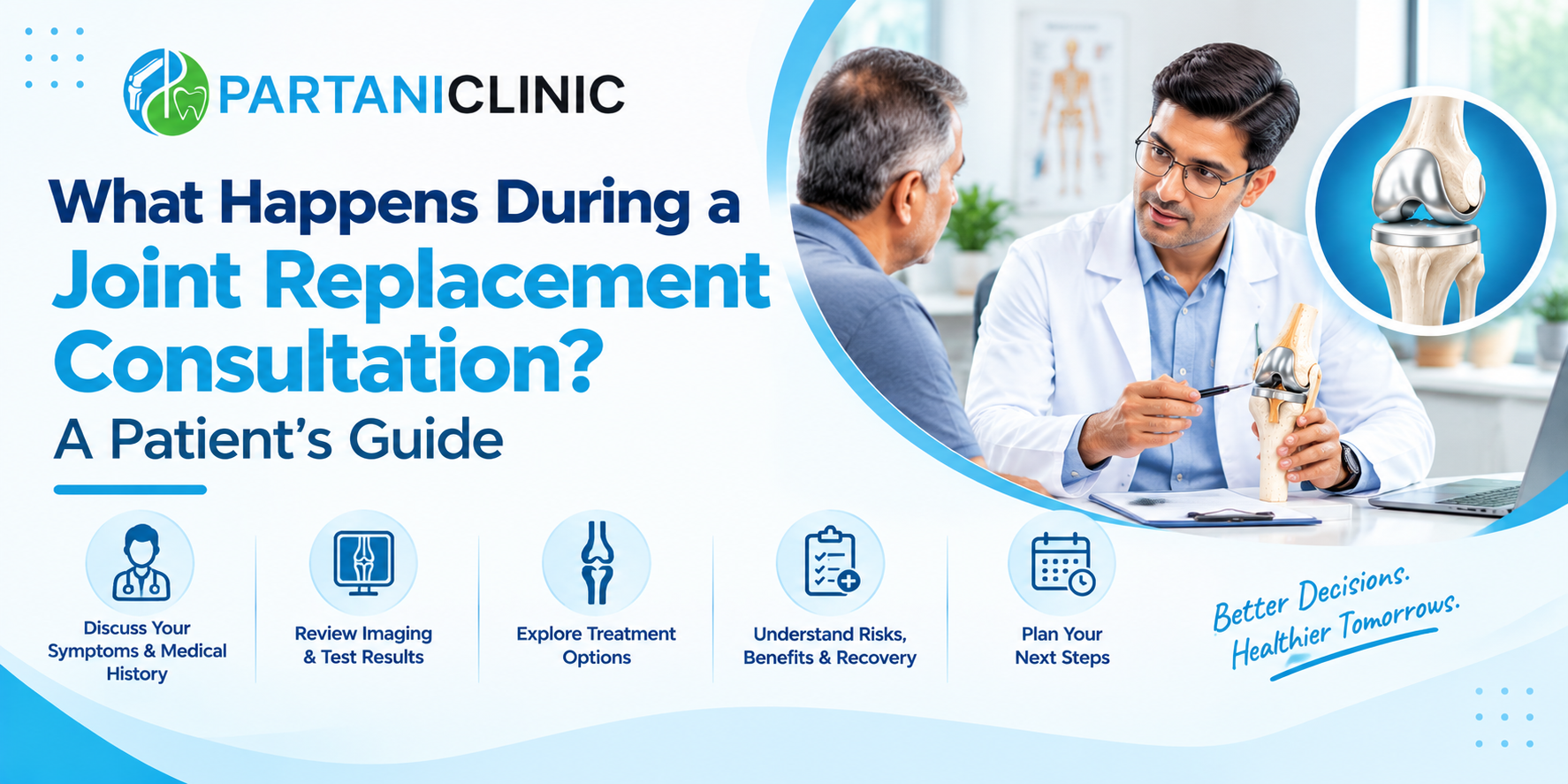
Deciding whether joint replacement is the right treatment can feel overwhelming, especially when you are dealing with persistent pain, stiffness, or difficulty moving. Many patients arrive at their first orthopedic consultation wondering what questions the doctor will ask, whether surgery is necessary, and what happens next.
A joint replacement consultation is not simply about deciding whether to operate. It is an opportunity to understand the cause of your symptoms, evaluate the condition of the joint, discuss available treatments, and create a plan suited to your individual needs.
If you are consulting a Joint Replacement Doctor in Jaipur, knowing what to expect can help you prepare for the appointment and have a more productive conversation.
The Consultation Begins With Your Symptoms
Your doctor will usually start by asking about your symptoms and how they affect your everyday life.
You may be asked:
- When did the pain begin?
- Is it constant or occasional?
- What activities make it worse?
- Do you experience stiffness or swelling?
- Can you walk comfortably?
- Do stairs or standing cause difficulty?
- Does pain disturb your sleep?
These details help the orthopedic specialist understand how your joint problem is affecting your quality of life.
Two patients can have similar X-rays but completely different symptoms and functional limitations, so your personal experience is an important part of the evaluation.
Your Medical History Matters
Your doctor may also ask about previous injuries, surgeries, medications, existing medical conditions, and earlier treatments.
For example, a previous fracture or ligament injury can affect the condition of the joint and may influence future treatment planning.
If you have undergone physiotherapy, injections, medication, arthroscopy, or another orthopedic treatment, mention it during the consultation.
Bringing previous reports and imaging studies can also help your doctor understand how your condition has changed over time.
A Physical Examination Helps Assess Joint Function
After discussing your symptoms, the doctor may examine the affected joint.
For knee problems, this can include checking:
- Range of motion
- Alignment
- Stability
- Muscle strength
- Swelling
- Tenderness
- Walking pattern
The examination provides information that cannot always be obtained from an X-ray alone.
For patients with previous trauma or complex injuries, a detailed assessment is particularly important. Someone searching for a Best Knee Trauma Doctor in Jaipur may need evaluation not only for arthritis but also for the effects of an old fracture, ligament injury, cartilage damage, or other structural problems.
Imaging Helps Identify the Extent of Joint Damage
Your orthopedic specialist may recommend or review imaging such as X-rays.
For knee arthritis, imaging can show changes such as joint-space narrowing, bone changes, deformity, or other signs of degeneration.
Depending on the symptoms and suspected condition, additional investigations may sometimes be required.
However, treatment decisions should not be based on imaging alone.
Your symptoms, physical examination, medical history, and functional limitations are considered alongside the images.
Does Every Joint Problem Require Replacement?
No.
One of the most important parts of a consultation is determining whether joint replacement is actually necessary.
Depending on the condition, treatment may include physiotherapy, strengthening exercises, activity modification, weight management, medication, injections, arthroscopy, or other appropriate treatments.
For some patients, these approaches may provide sufficient improvement.
For others with advanced joint damage and persistent symptoms, replacement may become a reasonable option.
The aim is to select the treatment that matches the patient's condition rather than recommending surgery simply because arthritis is present.
When Is Knee Replacement Discussed?
Knee replacement may be considered when significant joint damage causes persistent pain and functional limitations, particularly when appropriate non-surgical treatments have not provided adequate relief.
Patients considering Knee Replacement Surgery in Jaipur should understand that the decision depends on several factors.
Your doctor may consider the severity of arthritis, pain level, mobility, previous treatments, general health, age, activity requirements, and personal goals.
The consultation is therefore an important step before deciding whether surgery is appropriate.
What If You Have a Previous Knee Injury?
A history of trauma can make treatment planning more complex.
Previous ligament injuries, fractures, cartilage damage, or earlier operations may affect knee alignment, stability, bone quality, and movement.
This is why patients should provide their surgeon with complete information about previous orthopedic problems.
A specialist experienced in both joint replacement and trauma-related conditions can evaluate how the previous injury affects the current condition.
What Happens If Hip Replacement Is Needed?
The consultation process is similar for hip problems, although the examination and imaging focus on the hip joint.
Patients with advanced hip arthritis may experience groin pain, stiffness, difficulty walking, or problems with everyday movements.
Your doctor will determine whether the symptoms are coming from the hip and whether conservative treatment may help.
If the joint is severely damaged and symptoms significantly affect daily life, hip replacement may be discussed as a possible treatment.
Understanding Your Treatment Options
A good consultation should give you a clear picture of your options.
You can ask your doctor:
What is causing my joint pain?
Understanding the diagnosis is the foundation of treatment.
Do I need surgery now?
Ask whether continued conservative treatment is reasonable.
What alternatives are available?
Depending on your condition, there may be several treatment pathways.
What happens if I delay surgery?
Your doctor can explain the likely considerations based on your individual condition.
What will recovery involve?
Understanding rehabilitation, activity restrictions, and follow-up can help you prepare realistically.
How Technology May Be Considered
Modern joint replacement care may involve advanced planning tools and robotic-assisted techniques for selected patients.
If you are considering robotic-assisted knee replacement, your doctor can explain whether it is appropriate for your anatomy and condition.
Technology is only one part of treatment. The surgeon's clinical judgment, experience, patient selection, surgical planning, and postoperative care remain important.
The objective is to choose an appropriate treatment rather than selecting technology simply because it is newer.
Dr. Arun Partani's Orthopedic Experience
Dr. Arun Partani has more than 20 years of experience in orthopedic and joint replacement care. His qualifications include MS, DNB, FJRS, FAA (Germany), and OLC (Hong Kong).
His areas of expertise include total knee replacement, robotic-assisted knee replacement, partial knee replacement, hip replacement, shoulder replacement, knee arthroscopy, ACL reconstruction, sports injuries, ligament conditions, cartilage problems, and trauma-related orthopedic conditions.
At Partani Clinic, consultations focus on understanding the patient's symptoms, medical history, joint condition, lifestyle, and expectations before developing an appropriate treatment plan.
This allows surgical and non-surgical options to be considered according to the individual patient.
How Should You Prepare for Your Consultation?
A little preparation can make your appointment more useful.
Before visiting your orthopedic specialist, make a note of:
- When your symptoms started
- Previous injuries or surgeries
- Treatments you have already tried
- Current medications
- Activities you can no longer perform comfortably
- Questions you want to ask
Bring previous X-rays, scans, prescriptions, and medical reports if available.
It is also helpful to describe your actual daily limitations rather than simply saying that you have "knee pain."
For example, explain whether you cannot walk for more than 10 minutes, struggle with stairs, or wake up at night because of discomfort.
Why the First Consultation Matters
The first consultation sets the foundation for your treatment journey.
It allows your doctor to determine what is causing the problem, understand how severely it affects you, and identify suitable treatment options.
For some patients, the next step may be physiotherapy or lifestyle modification. For others, further investigations may be necessary. Patients with advanced joint damage may be advised to consider replacement surgery.
There is no universal timeline.
The right approach depends on the individual patient.
Conclusion
A joint replacement consultation is much more than a discussion about surgery. It is a detailed evaluation of your symptoms, joint condition, medical history, mobility, previous treatments, and personal goals.
If you are considering Knee Replacement Surgery in Jaipur, a detailed orthopedic consultation can help you understand whether replacement is appropriate and what alternatives may be available.
Patients with previous injuries or complex knee problems can also benefit from assessment by a Best Knee Trauma Doctor in Jaipur, particularly when old injuries may be contributing to current symptoms.
At Partani Clinic, Dr. Arun Partani brings more than two decades of experience in joint replacement, knee and hip surgery, robotic-assisted knee procedures, arthroscopy, ACL reconstruction, shoulder replacement, sports injuries, and trauma-related orthopedic care. His approach focuses on understanding the individual patient before recommending an appropriate treatment pathway.
Frequently Asked Questions
1. What should I bring to a joint replacement consultation?
Bring previous X-rays, MRI or scan reports, prescriptions, medical records, details of earlier surgeries or injuries, and a list of current medications. A record of previous treatments can help the orthopedic specialist understand what has already been tried.
2. How does a Joint Replacement Doctor in Jaipur decide if I need surgery?
The decision is based on several factors, including symptoms, physical examination, imaging findings, severity of joint damage, functional limitations, previous treatment, general health, and personal goals. Surgery is generally considered when significant joint problems continue to affect daily life despite appropriate treatment.
3. Can I avoid Knee Replacement Surgery in Jaipur if my arthritis is diagnosed early?
Some patients with early or moderate arthritis may manage their symptoms with treatments such as physiotherapy, strengthening exercises, weight management, medication, activity modification, or other appropriate options. However, treatment depends on the individual condition, and early arthritis does not always follow the same course in every patient.
4. Why is previous trauma important when planning knee replacement?
Previous fractures, ligament injuries, cartilage damage, or knee operations can affect alignment, stability, bone condition, and joint movement. A specialist experienced in trauma and joint replacement can consider these factors when evaluating the most appropriate treatment approach.
5. What questions should I ask before agreeing to joint replacement?
Ask why surgery is being recommended, what alternatives are available, what type of replacement is appropriate, what risks and benefits should be considered, how recovery will progress, what rehabilitation will involve, and when you may return to normal activities. These questions can help you understand the treatment plan and set realistic expectations.

 English
 Arabic
 French
 Spanish
 Portuguese
 Turkish
 Dutch
Dutch
 Italiano
 Russian
 Romaian
 Portuguese (Brazil)
 Greek
Greek