


How Modern Vein Specialists Treat Different Stages of Varicose Veins
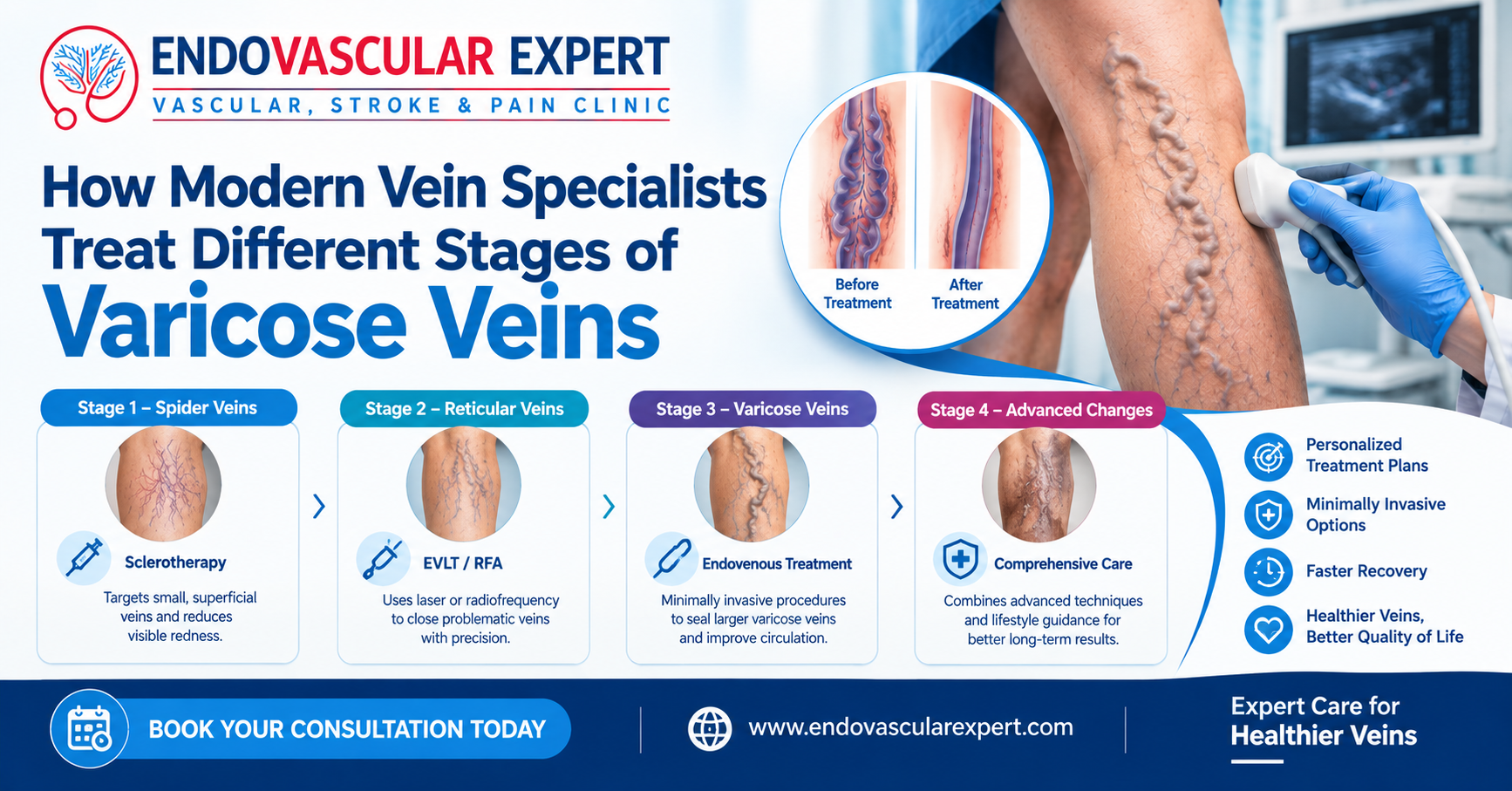
Varicose veins can develop gradually, and their appearance does not always indicate how much the underlying veins are being affected. For some people, they begin as small visible veins with little discomfort. Over time, symptoms such as aching, heaviness, swelling, skin discoloration, or ulcers may develop.
Because every case is different, treatment is generally planned according to the stage of the condition, symptoms, vein anatomy, and blood-flow findings. Consulting a Varicose Veins Specialist in Jaipur can help patients understand whether their condition requires observation, medical management, or an appropriate vein procedure.
Varicose Veins Can Change Over Time
Varicose veins are usually associated with problems involving the valves inside the veins. These valves help blood move toward the heart. When they become weak or do not close properly, blood can flow backward and increase pressure inside the veins.
Initially, the problem may be mainly cosmetic. However, persistent venous pressure can contribute to symptoms and skin changes in some patients. This is why an evaluation should consider more than just the appearance of the veins.
Early-Stage Varicose Veins
In the earlier stages, patients may notice small visible veins, mild heaviness, occasional aching, or tiredness in the legs. Symptoms may become more noticeable after prolonged standing or toward the end of the day.
At this stage, the doctor may assess the patient's lifestyle, symptoms, medical history, and circulation. Depending on the findings, recommendations may include regular physical activity, avoiding prolonged standing or sitting, weight management, and other supportive measures.
Not every early varicose vein requires an immediate procedure. The decision should be based on the patient's symptoms and vascular assessment.
When Symptoms Become More Noticeable
As venous problems progress, patients may experience persistent aching, leg heaviness, swelling around the ankles, burning sensations, or nighttime cramps.
Visible veins may also become larger and more prominent. At this point, a clinical evaluation and Color Doppler examination can provide useful information about blood flow and the functioning of the affected veins.
If an abnormal vein is contributing significantly to symptoms, a specialist may discuss treatment options such as Radiofrequency Ablation, EVLT, or sclerotherapy, depending on the individual findings.
Advanced Varicose Veins and Skin Changes
Long-standing venous disease can sometimes affect the skin around the lower legs. Patients may develop skin discoloration, thickening, irritation, or other changes.
These signs indicate that the condition should not be considered merely a cosmetic issue. Persistent venous pressure can affect the tissues surrounding the affected veins, making timely assessment increasingly important.
Treatment at this stage focuses on identifying the underlying venous problem and managing both symptoms and complications.
Varicose Veins With Leg Ulcers
One of the more serious complications associated with chronic venous disease is a leg ulcer. These wounds may develop around the ankle or lower leg and can be slow to heal.
Leg Ulcer Treatment in Jaipur may require assessment of circulation, wound care, management of venous disease, and treatment of contributing factors. Simply treating the wound without evaluating the underlying circulation may not address the complete problem.
Patients with a persistent wound, increasing pain, discharge, redness, or swelling should seek medical assessment rather than attempting prolonged self-treatment.
Why Color Doppler Can Be Important
Color Doppler ultrasound is an important diagnostic tool in the evaluation of many venous conditions. It can help doctors examine blood flow and identify abnormalities in the veins.
For varicose veins, imaging may help determine which veins are affected and whether abnormal blood flow is contributing to the patient's symptoms. This information can then be used to plan an appropriate treatment strategy.
A treatment decision based on both clinical assessment and imaging can be more individualized than simply treating visible veins.
Modern Treatment Options for Varicose Veins
Modern vein care includes several approaches, and the choice depends on the patient's vascular anatomy and condition.
Radiofrequency Ablation (RFA) uses controlled radiofrequency energy to close a selected abnormal vein.
Endovenous Laser Therapy (EVLT) uses laser energy to treat an affected vein under image guidance.
Sclerotherapy involves introducing a sclerosing solution into selected veins so that they close gradually.
These procedures are not automatically appropriate for every patient. A specialist evaluates the affected veins and recommends an option according to the individual's condition.
When Varicose Veins Are Associated With Other Vascular Problems
Not all leg swelling or pain is caused by varicose veins. Deep Vein Thrombosis is a different vascular condition in which a blood clot develops in a deep vein.
Symptoms such as sudden swelling, pain, warmth, or discoloration require appropriate medical evaluation. A DVT Treatment Specialist in Jaipur may use Doppler ultrasound and other investigations to determine whether a deep vein clot is present.
Distinguishing DVT from chronic venous disease is important because the two conditions require different treatment approaches.
Dr. Nikhil Bansal: Interventional Radiology and Vascular Care
Dr. Nikhil Bansal is an Interventional Radiologist based in Jaipur with experience in Interventional Radiology treatment. His qualifications include M.D., P.G.D.H.H.M., FVIR, and FIPM.
He serves as an Assistant Professor in the Department of Interventional Radiology at Mahatma Gandhi Hospital, Jaipur, and is also associated with vascular, stroke, and pain care.
His areas of expertise include vascular interventions and image-guided procedures. His clinical work covers conditions such as varicose veins, peripheral vascular disease, deep vein thrombosis, aortic aneurysm, lymphedema, and other vascular conditions.
His Interventional Radiology expertise also includes procedures such as EVLT, Radiofrequency Ablation, sclerotherapy, and other image-guided treatments where clinically appropriate.
A Broader Approach to Vascular Health
Vein problems do not always occur in isolation. A patient may have varicose veins along with other circulation-related conditions that require separate evaluation.
A comprehensive vascular assessment can help distinguish superficial venous disease from problems involving deep veins or arteries. This is particularly important when symptoms such as persistent leg pain, swelling, skin changes, or ulcers are present.
The goal of specialist care is therefore not simply to make visible veins less prominent. It is to understand the circulation problem and select appropriate management based on the patient's condition.
When Should You See a Specialist?
Medical evaluation is advisable when varicose veins are associated with persistent pain, swelling, heaviness, skin discoloration, recurrent bleeding, or wounds that are slow to heal.
Sudden swelling or significant pain in one leg should receive prompt attention because conditions such as DVT need to be ruled out.
Early assessment can also help patients understand whether their veins require treatment or whether conservative management and monitoring are appropriate.
Conclusion
Varicose veins can present differently at different stages, from visible veins and mild heaviness to swelling, skin changes, and leg ulcers. As the condition progresses, treatment needs may also change.
For people looking for a Varicose Veins Specialist in Jaipur, a proper evaluation can help identify the underlying venous problem and determine an appropriate treatment pathway. Modern options such as EVLT, RFA, and sclerotherapy can be considered for selected patients, while advanced cases may require additional management for skin complications or ulcers.
With his background in Interventional Radiology, vascular procedures, and image-guided treatment, Dr. Nikhil Bansal provides specialist-focused care for a range of vascular conditions. A personalized assessment remains the most important step in deciding how varicose veins should be managed at each stage.

 English
 Arabic
 French
 Portuguese
 Deutsch
 Turkish
 Dutch
Dutch
 Italiano
 Russian
 Romaian
 Portuguese (Brazil)
 Greek
Greek