Why First-Party Data and Privacy-First Design Are Winning the Web in 2026

Third-party cookies are fading fast. Discover how modern websites and digital creators are using first-party data and privacy-first UX to build lasting trust.
For more than a decade, the standard playbook for growing an online platform relied on invisible tracking: drop a third-party pixel, follow visitors across the internet, and serve retargeted ads until they convert. That era is officially over. With tighter global privacy regulations, browser-level tracking restrictions, and users actively choosing privacy-focused tools, relying on borrowed behavioral data is no longer a viable growth strategy.
In 2026, the websites winning user trust and organic traffic are those built around first-party data and transparent, consent-driven experiences.
What First-Party Data Actually Looks Like
First-party data is information your audience willingly shares directly with your platform. Unlike creepy cross-site tracking, it is rooted in clear value exchanges. Examples include:
-
Preference onboarding: Asking new members what topics, tools, or product categories they care about during signup.
-
Interactive quizzes and calculators: Offering an instant, personalized result in exchange for user inputs.
-
Purchase and engagement history: Understanding which downloads, articles, or community threads a registered user actually interacts with on your own domain.
-
Direct feedback loops: Polls, feature request boards, and post-purchase surveys.
When you own this data directly inside your platform’s database, you are immune to sudden algorithm shifts or ad-network policy changes.
Privacy as a Conversion Driver
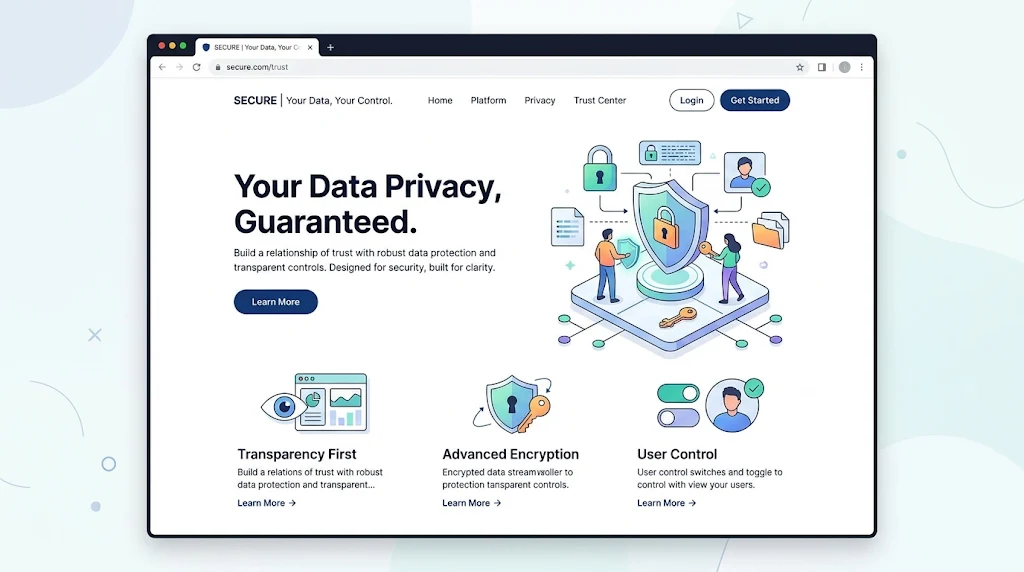
Many website owners still treat privacy notices and data controls as legal obligations—annoying popups to hide in fine print. Leading digital brands have flipped that mindset: visible privacy is now a competitive conversion signal.
When visitors land on a website that loads fast without dozens of bloated third-party ad scripts, displays clear security badges, and explains in plain English how their information is used, bounce rates drop. Users are far more willing to create an account, subscribe to a newsletter, or complete a checkout when they feel respected rather than harvested.
Three Steps to Future-Proof Your Website
-
Audit your third-party scripts: Every external tracker slows down your page load speed and introduces privacy risks. Remove legacy analytics tools you never check and consolidate around lightweight, privacy-compliant analytics.
-
Build a "value-first" lead magnet: Instead of a generic "Sign up for updates" box, offer a downloadable template, a free resource vault, or a niche checklist that solves an immediate problem.
-
Structure your content for conversational search: Search behavior has expanded beyond traditional ten-blue-links results into AI summaries and voice queries. Using clear question-and-answer headings and structured schema markup helps both human readers and modern search engines understand your authority.
The web is returning to fundamentals. Treat user attention and personal data as a privilege, and your website will build an audience that sticks around for years.