

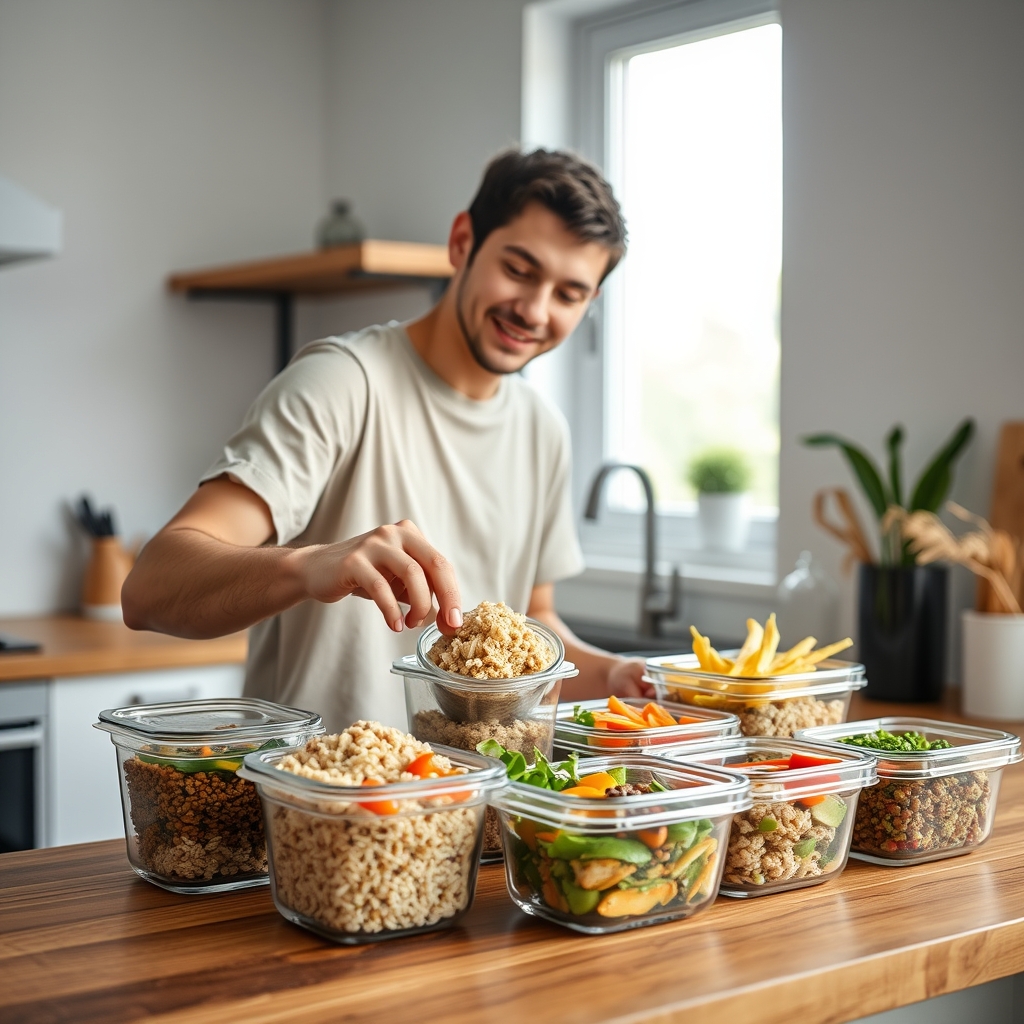
Meal Prep on a Budget: A Simple Beginner's Guide to Saving Time and Money

Meal Prep on a Budget: A Simple Beginner's Guide to Saving Time and Money
Busy days often end with expensive takeaway or snacks instead of a real meal. Meal prep can fix that. By planning and cooking ahead, you can eat better, save money, and spend less time in the kitchen during the week.
Quick answer: Meal prep means planning and preparing some of your meals in advance. To do it on a budget, plan your meals for the week, make a grocery list, and stick to it. Compare prices, buy foods that store well, and use low-cost ingredients like beans, rice, and frozen vegetables. Cook in batches, store food in the fridge within 2 hours, and eat leftovers within 3 to 4 days.
What Is Meal Prep?
Meal prep is short for "meal preparation." It means getting your meals ready ahead of time. This can be as simple as cutting vegetables for the week or as full as cooking all your lunches on Sunday.
There is no single right way. You can:
- Cook full meals and pack them into boxes.
- Batch-cook basics, like rice, beans, or a big pot of soup, and mix them into different meals.
- Prep ingredients only, like washing and chopping vegetables, so cooking is faster later.
Why Meal Prep Saves Money
- Fewer takeaway meals. When food is ready at home, it is easier to skip expensive orders.
- Less food waste. You buy only what you plan to use.
- Smarter shopping. A plan stops impulse buys at the store.
- Time saved. Cooking once for several meals means less daily cooking and cleaning.

Step 1: Plan Your Meals for the Week
The U.S. Department of Agriculture's MyPlate program puts it simply: "Plan, plan, plan." It suggests you "plan your meals for the week based on your food budget."
Start small. You do not have to plan every meal. Try planning just your lunches or dinners for five days.
- Check what food you already have at home.
- Choose recipes that share ingredients, so nothing goes to waste.
- Pick simple meals you already enjoy.
Step 2: Make a Grocery List
Write down everything you need for your plan. Group items by type, like vegetables, grains, and protein, to make shopping faster. Then stick to the list.
Step 3: Shop Smart
MyPlate shares several simple money-saving tips:
- Compare prices. Check the "unit price" on the shelf label to see which size or brand gives the best value.
- Buy foods that store well in bulk. Whole grains and dried beans last a long time. But avoid buying more than you will use.
- Look for sales on fresh produce. MyPlate notes that "buying what is on sale is a great way to save money and get variety."
- Stretch your meals. MyPlate suggests adding "beans and canned or frozen vegetables to bulk up your meals."

Budget-Friendly Ingredients to Try
| Food Type | Low-Cost Ideas |
|---|---|
| Grains | Rice, oats, pasta, bread |
| Protein | Lentils, dried beans, eggs, chickpeas |
| Vegetables | Seasonal produce, frozen mixed vegetables, cabbage, carrots |
| Fruit | Seasonal fruit, bananas |
| Flavor | Onions, garlic, simple spices |
Prices differ by country and season, so look for what is cheapest and freshest near you.
Step 4: Cook in Batches
Choose one or two days a week to cook. Make large amounts of a few basics. For example:
- A big pot of rice or another grain.
- A pot of lentils, dal, or beans.
- A tray of roasted or stir-fried vegetables.
- A few boiled eggs.
Mix and match these through the week to make different meals. Rice and dal one day, a vegetable rice bowl the next, an egg and vegetable wrap after that.
Step 5: Store Food Safely
Food safety is very important when you cook ahead. The University of Nebraska–Lincoln Extension gives clear rules:
- Chill fast: "Refrigerate food within 2 hours of cooking."
- Use shallow containers: Split food into smaller portions so it cools quickly.
- Eat in time: "Leftovers can be kept in the refrigerator for 3 to 4 days or frozen for 2 to 6 months."
- Reheat well: Reheat leftovers "to a temperature of 165°F or until hot and steamy." That is about 74°C.
A good habit is to freeze meals you plan to eat later in the week, and keep only the next few days of meals in the fridge.

A Simple 5-Day Lunch Plan Example
Here is a made-up example using a few batch-cooked basics:
| Day | Lunch |
|---|---|
| Monday | Rice, dal, and mixed vegetables |
| Tuesday | Vegetable fried rice with an egg |
| Wednesday | Chickpea and vegetable curry with rice |
| Thursday | Egg and vegetable wrap |
| Friday | Lentil soup with bread |
Common Meal Prep Mistakes
- Planning too many new recipes at once.
- Cooking more food than you can eat in 3 to 4 days.
- Leaving cooked food out for hours before storing it.
- Eating the same meal every day until you are bored of it.
- Forgetting to label containers with the date.
Share Ideas With Others
Swapping recipes and tips with others can make meal prep more fun. On WeConectus, you can connect with people, join communities, and share ideas, including your favorite budget meals. Learn more about WeConectus.
Frequently Asked Questions
What is meal prep?
Meal prep means planning and preparing meals ahead of time, such as cooking lunches for the week on one day.
Does meal prep really save money?
It often does. Planning helps you avoid takeaway, impulse buys, and food waste.
How long can meal prep food last in the fridge?
Cooked leftovers can usually be kept in the fridge for 3 to 4 days, according to University of Nebraska–Lincoln Extension. Freeze anything you will not eat in that time.
Can I freeze prepared meals?
Yes. Many cooked meals can be frozen for 2 to 6 months. Use freezer-safe containers and leave a little space for the food to expand.
What are the cheapest foods for meal prep?
Rice, oats, dried beans, lentils, eggs, and seasonal or frozen vegetables are usually low-cost and easy to cook in batches.
How do I avoid getting bored of the same meals?
Cook a few basics and mix them in different ways. Change spices, sauces, and vegetables during the week.
How should I reheat meal prep food?
Reheat food until it is hot and steaming all the way through, about 165°F (74°C). Bring soups and sauces to a full boil.
Final Thoughts
Meal prep does not need to be hard or expensive. Plan your meals, make a list, and shop smart. Cook a few basics in batches, store them safely, and eat them within a few days. Start with just a few meals a week, and build from there.
This article is for general information only. If you have special dietary needs or health conditions, speak with a qualified health professional or dietitian.


