

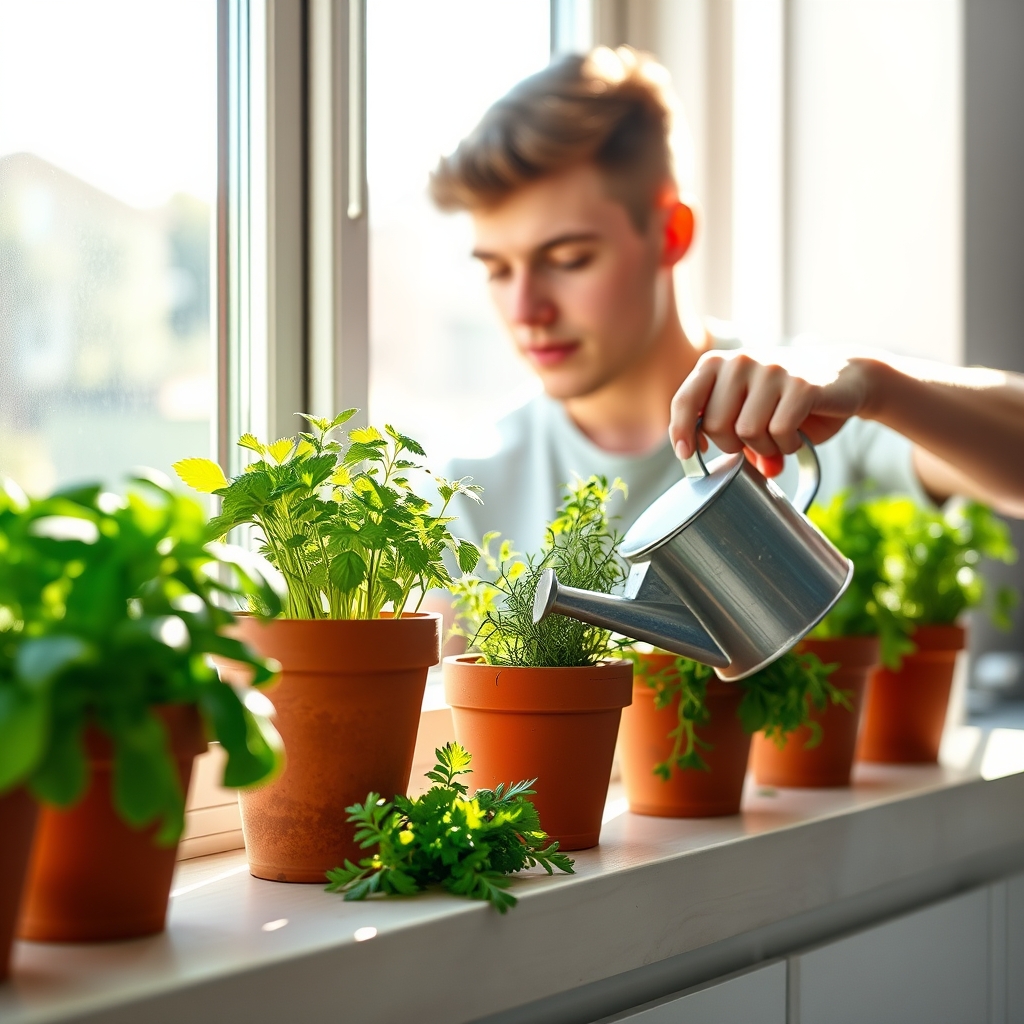
How to Grow Herbs Indoors: A Simple Beginner's Guide

How to Grow Herbs Indoors: A Simple Beginner's Guide
Fresh herbs make simple meals taste better. But buying them every week can add up, and they often wilt before you use them. Growing herbs indoors is an easy, low-cost way to have fresh leaves ready whenever you cook. You only need a sunny window, a few pots, and a little care.
Quick answer: To grow herbs indoors, place them near your sunniest window, where they can get about 6 hours of direct sun a day. Use pots with drainage holes and a light potting mix. Water when the top of the soil feels dry. Keep them in a warm room, turn the pots often, and pick leaves regularly. Easy herbs to start with include basil, mint, chives, and parsley.
Why Grow Herbs at Home?
- Save money. The U.S. Department of Agriculture's MyPlate program suggests growing herbs like basil and oregano at home "for a fraction of the price."
- Always fresh. Pick only what you need, right before you cook.
- Less waste. No more bunches going bad in the fridge.
- A calm hobby. Caring for plants can be a relaxing part of your day.
Best Herbs for Beginners
NC State Extension lists "parsley, mints, rosemary, sage, chives, lemon verbena, basil, oregano, and thyme" as popular indoor herbs.
| Herb | Why It Is Good for Beginners |
|---|---|
| Basil | Grows fast and loves warm, sunny spots |
| Mint | Very easy to grow; best kept in its own pot |
| Chives | Handles lower light well |
| Parsley | Steady grower for everyday cooking |
| Coriander (cilantro) | Handles lower light; great for many dishes |
Penn State Extension suggests avoiding herbs with very large roots, like fennel, for indoor pots.

Step 1: Find the Right Light
Light is the most important part of growing herbs indoors. Penn State Extension says, "Most herbs need 6 hours of direct sunlight."
- Place pots on your sunniest windowsill. In the Northern Hemisphere, a south-facing window is usually best.
- Turn your pots often. Penn State advises you to "rotate pots often so that each side gets enough light."
- Watch for warning signs. Without enough sun, herbs "will become thin and spindly."
Not enough sunlight? You can use a grow light. NC State Extension notes that plants need "8-10 hours of artificial light per day" if it is their only light source.
Step 2: Choose Pots and Soil
Good drainage keeps roots healthy. Penn State advises growing herbs "in containers with a drainage hole and in a potting mix that will aid water drainage."
- Use pots with at least one hole in the bottom.
- Put a tray or saucer under each pot to catch water.
- Use a light, clean potting mix, not heavy garden soil. NC State Extension says "sterile potting soil is best for indoor planting."
Reusing old containers? Clean them well and make holes in the bottom first.

Step 3: Water the Right Way
Too much water is one of the most common mistakes. Use the finger test from NC State Extension: check that the soil is "dry for at least an inch down" before you water. That is about 2.5 cm.
- Water slowly until it drains out of the bottom hole.
- Empty the tray afterward, so the roots do not sit in water.
- Herbs like rosemary, thyme, and oregano like to dry out a little between waterings.
- Basil is different. Penn State warns to "never allow the potting mix to dry out completely."
Step 4: Keep Them Warm
Most herbs like a comfortable room. Penn State suggests daytime temperatures of about 65 to 70°F (about 18 to 21°C). Basil is sensitive to cold and does not like temperatures below 50°F (about 10°C).
Keep pots away from cold drafts, and do not let leaves touch cold window glass in winter. Also avoid placing them right next to a heater or air conditioner.
Step 5: Harvest Often
Herbs are meant to be picked and used. Regular harvesting can help many herbs grow fuller.
- Use clean scissors to snip leaves or stem tips.
- Take a little at a time, and leave plenty of leaves on the plant so it can keep growing.
- For basil, pinch off the top leaves to help the plant grow bushier.

Common Problems and Simple Fixes
| Problem | Likely Cause | Simple Fix |
|---|---|---|
| Tall, thin stems | Not enough light | Move to a sunnier spot or add a grow light |
| Yellow leaves | Often too much water | Let soil dry out more between waterings |
| Wilting | Too dry, or roots sitting in water | Check soil with your finger and adjust |
| Slow growth | Cold room or low light | Move to a warmer, brighter place |
A Note for Pet Owners
Some plants can be harmful to pets. For example, Penn State notes that tarragon is toxic to dogs and cats. If you have pets, check that each plant is safe before bringing it home, and keep pots out of reach.
Share Your Growing Journey
Growing herbs is more fun when you share tips and progress with others. On WeConectus, you can join communities, share photos of your plants, and swap ideas with other home gardeners. Learn more about WeConectus.
Frequently Asked Questions
Which herbs are easiest to grow indoors?
Basil, mint, chives, parsley, and coriander are good choices for beginners. Chives and coriander also handle lower light.
How much light do indoor herbs need?
Most herbs need about 6 hours of direct sunlight a day. If you use only a grow light, plan for about 8 to 10 hours a day.
How often should I water indoor herbs?
Water when the soil feels dry about an inch (2.5 cm) down. Let extra water drain out, and do not let pots sit in water.
Why are my herbs tall and thin?
This usually means they are not getting enough light. Move them to a sunnier window or add a grow light.
Can I grow herbs without a sunny window?
Yes. A grow light can replace sunlight. You can also choose herbs that handle lower light, like chives and coriander.
Do herbs need special pots?
No, but pots must have drainage holes. Use a light potting mix instead of heavy garden soil.
How do I harvest herbs without killing the plant?
Snip a little at a time with clean scissors, and leave plenty of leaves so the plant can keep growing.
Final Thoughts
Growing herbs indoors is simple and rewarding. Give them plenty of light, use pots with good drainage, water only when the soil is dry, and keep them warm. Pick leaves often and enjoy fresh flavor in your cooking. Start with one or two easy herbs, and grow your garden from there.


